
ACCA SBL Exam Guide: Pass Rates, Pre-seen and How to Pass
November 22, 2026
Strategic Business Leader is the paper where knowing the material stops being enough. By the time you reach it, you have passed exams that reward accurate recall and clean calculation. SBL rewards something different: reading a messy business situation, working out what the board actually needs, and telling them in a format a real executive would accept. Students who treat it as one more knowledge exam are the ones who end up in the half that fails.
This guide covers everything you need to plan and pass ACCA SBL: how the exam is built, what the pass rate history tells you, how to use the pre-seen, where the 20 professional skills marks come from, a realistic study plan, and what happens to SBL when the qualification changes in 2027.
Quick Answer: ACCA SBL at a Glance
| Feature | Detail |
|---|---|
| Level | Strategic Professional, Essentials (compulsory) |
| Exam length | 3 hours 15 minutes |
| Structure | One integrated case study with three compulsory tasks |
| Marks | 100: 80 technical marks and 20 professional skills marks |
| Pre-seen material | Released two weeks before the exam through Exam Planner |
| Format | Session computer-based exam, closed book, answered in word processor, spreadsheet and slide response options |
| Pass mark | 50 |
| Latest pass rate | 53% (September 2026) |
| Next sittings | Tuesday 8 December 2026, Tuesday 2 March 2027, Tuesday 8 June 2027 |
| After June 2027 | A pass in SBL gives credit for S2 Strategic Business Leader in the redesigned qualification |
What SBL Is Really Testing
SBL puts you in the position of an adviser to senior management. The case organisation is fictional but realistic, and every task asks you to do something a finance professional is genuinely asked to do: write a report for the board, prepare slides for a meeting, draft an email to a director, or brief a manager on a risk they have not spotted.
The syllabus is broad because leadership is broad. It covers these technical areas:
- A. Leadership: leadership styles, ethics, professional values and corporate culture.
- B. Governance: stakeholders, the board, reporting to stakeholders and public sector governance.
- C. Strategy: strategic position, choices and the tools used to analyse them.
- D. Risk: identifying, assessing and managing risk.
- E. Technology and data analytics: cloud, cyber security, big data, e-business and digital transformation.
- F. Organisational control and audit: internal control, internal audit and reporting on control.
- G. Finance in planning and decision-making: using financial analysis to support strategic decisions.
- H. Innovation, performance excellence and change management: process redesign, project management and leading change.
If that list looks like a summary of everything you have studied, that is the point. SBL draws on knowledge from earlier papers, especially BT, PM, AA and FM, and asks you to use it together. Anyone who passed those papers by memorising rather than understanding will feel the gap here first. Our ACCA syllabus guide shows how each earlier paper feeds into the Strategic Professional level.
How the SBL Exam Is Built

Since September 2023, SBL has followed a tighter structure than the original four-hour format. ACCA cut the exam time to 3 hours and 15 minutes because background information about the case organisation now arrives in advance, in the pre-seen. The number of exhibits in the exam itself was reduced to match.
The three tasks
Every SBL exam has three compulsory tasks. Each task can have several parts, and the marks per task vary from exam to exam. A typical task might ask for a report to the board in part (a) and two presentation slides with notes in part (b). Each part is answered in its own response option, not in one long document.
The exhibits
New information arrives as exhibits: memos, emails, briefing notes, interview extracts, web pages and financial reports. Exhibits are where the marks are. The pre-seen gives you context; the exhibits give you the facts the task wants you to use.
The response options
You answer in a workspace with three tools: a word processor, a spreadsheet and slides. Some tasks tell you which to use. When a task does not specify, you choose. A briefing paper or email belongs in the word processor, calculations belong in the spreadsheet, and slides should be brief points with notes underneath, not paragraphs pasted onto a slide.
Timing
With 195 minutes for 100 marks, you have just under two minutes per mark. That number is worth memorising. A 12-mark part deserves about 23 minutes, including reading the relevant exhibit. Students who spend 50 minutes perfecting the first task almost always run out of time on the third, and an unattempted part scores zero however good everything else was.
If you have not sat a Strategic Professional computer-based exam before, read our guide to how ACCA computer-based exams work, then practise in the real software on the ACCA Practice Platform until moving between exhibits, tasks and response options feels automatic.
ACCA SBL Pass Rate History
SBL is one of the most stable papers in the qualification. For the last four years its pass rate has stayed between 49% and 53%, which tells you two things: it is not a lottery, and roughly one candidate in two still does not get through.
| Session | SBL pass rate |
|---|---|
| September 2026 | 53% |
| June 2026 | 51% |
| March 2026 | 52% |
| December 2025 | 50% |
| September 2025 | 51% |
| June 2025 | 51% |
| March 2025 | 53% |
| December 2024 | 51% |
| September 2024 | 53% |
| June 2024 | 52% |
| March 2024 | 52% |
| December 2023 | 52% |
| September 2023 | 50% |
| June 2023 | 51% |
| March 2023 | 50% |
| December 2022 | 49% |
| September 2022 | 49% |
| June 2022 | 50% |
| March 2022 | 50% |
A few things stand out.
The pre-seen did not make SBL easier. The pass rate was 51% in June 2023, the last sitting without a pre-seen, and 50% in September 2023, the first sitting with one. The format changed; the standard did not.
SBL sits near the top of the Strategic Professional papers. In September 2026, SBL passed 53% of candidates, against 50% for SBR, 47% for AFM, 41% for APM, 53% for ATX and 42% for AAA. SBL is not the hardest paper at this level on the numbers; AAA and APM usually are.
Stability cuts both ways. A steady 50% means the examining team holds a consistent bar. You cannot hope for an easy session. You pass by meeting the standard, which is learnable.
For every paper's history side by side, see our ACCA pass rates page. ACCA also publishes the full Strategic Professional pass rate table going back to the old P-papers.
Why Half of SBL Candidates Fail
Most SBL failures are not caused by missing knowledge. They come from a handful of habits that the exam punishes every session.
Writing theory instead of answering the task
A task asks you to evaluate whether a proposed acquisition fits the company's strategy. A weak answer explains what Ansoff's matrix is. A strong answer says the acquisition is a diversification move, that the exhibit shows the target's customers overlap with only one of the company's three divisions, and that the board's stated aim in the pre-seen was to consolidate. The model is a tool for thinking, not the answer. ACCA rarely names which model to use, and markers reward applied points, not definitions.
Ignoring the exhibits
Everything the task needs is in the exhibits and the pre-seen. Students who answer from general knowledge produce answers that could apply to any company. Every point you make should be traceable to something specific in the case: a number, a quote from a director, a date, a complaint.
Ignoring the role and the reader
If the task says you are a consultant writing to a sceptical non-executive director, your tone, structure and level of detail must fit that person. Communication marks depend on it. A report needs headings and a clear recommendation; an email needs to get to the point; slides need short points and notes.
Running out of time
At just under two minutes per mark, a long first answer steals directly from your third task. Set a finish time for each part and move on when it arrives.
Using the software badly
Calculations typed into the word processor, whole exhibits copied into an answer, slides without notes, and notes without slides all cost marks. These are habits you fix in practice, not on exam day.
How to Use the SBL Pre-seen Properly
The pre-seen is released through Exam Planner two weeks before the exam, and ACCA emails you when it is available. It describes the case organisation, its industry and its situation. It is not the exam, and you cannot pass by memorising it, but used well it saves you a lot of reading time on exam day.
For the December 2026 sitting on Tuesday 8 December, that means the pre-seen arrives in the last week of November. If you are sitting in December, this is the week to clear your diary.
A practical two-week plan
- Days 1 to 2: read it twice. First for the story, then slowly with notes. Who are the key people? What does the company sell, to whom, and how does it make money? What has changed recently?
- Days 3 to 4: analyse the numbers. Work out the obvious ratios, growth rates and trends in any financial information. Put them in a one-page summary you can recall.
- Days 5 to 6: map it to the syllabus. For each syllabus area, write two or three issues the company might face. Governance problems on the board? Cyber risk from a new system? A change project that staff resist?
- Days 7 to 8: research only what you do not understand. If the pre-seen mentions an industry practice you have never heard of, look it up. Do not do general research about the real-world industry; it will not score marks.
- Days 9 to 12: keep practising full past exams. The pre-seen is context, not a replacement for question practice. Attempt at least two full exams in 3 hours 15 minutes in the CBE software.
- Days 13 to 14: consolidate. Reread your one-page summary, rest and stop adding new material.
The biggest mistake with the pre-seen is trying to predict the exam. Students who spend two weeks writing model answers to imagined tasks walk in expecting one question and freeze when they get another. Understand the company; do not guess the questions.
The 20 Professional Skills Marks
One mark in five on SBL is for professional skills, and they are the marks most students leave on the table. There are five skills, each tested once in the exam and each worth 4 marks. The task tells you which skill is being assessed in each part.
| Skill | What earns the marks | What loses them |
|---|---|---|
| Communication | Correct format for the document asked, a clear structure, a tone that suits the reader | An essay when an email was asked for, no headings, slides without notes |
| Commercial acumen | Showing awareness of the wider business context: competitors, customers, practical constraints, commercial consequences | Recommendations that ignore cost, time or how the market would react |
| Analysis | Using the data in the exhibits, explaining what the numbers mean and why they matter | Repeating numbers without interpreting them |
| Scepticism | Questioning information, spotting bias or missing evidence, challenging a director's assumptions | Accepting every claim in the exhibits at face value |
| Evaluation | Weighing both sides, reaching a justified conclusion and recommendation | Lists of points with no judgement or conclusion |
The professional skills marks are not awarded separately from your technical points. You earn them by how you make those points. A sceptical answer questions where a director's forecast came from. An evaluative answer ends with a recommendation and the reason for it. Practise marking your own answers against both the technical and the professional skills criteria in ACCA's marking guides.
Worked Example: Turning One Exhibit Into Marks
Here is an illustration of the gap between a pass and a fail. It is a simplified, made-up scenario, not a real exam question.
The situation: the pre-seen describes a mid-sized hotel group expanding across South Asia. An exhibit in the exam is an email from the finance director saying a new booking system will "definitely" cut costs by 15% next year, and asking you to prepare a briefing note for the board on whether to approve it.
A weak answer explains the benefits of technology in general, lists the advantages of cloud systems, and recommends approval because new systems improve efficiency. It is accurate and earns very little, because it could be written about any company without reading the exhibit.
A strong answer is a short briefing note with headings. It points out that the 15% figure comes from the finance director, who sponsored the project, with no supporting calculation (scepticism). It checks the figure against the cost data in the pre-seen and shows what 15% means in money terms (analysis). It raises the cyber and data protection risk of holding guest payment data in a new system across several countries (technical knowledge applied to the case). It notes that a rival chain in the pre-seen has already switched, so delay has a cost (commercial acumen). It ends with a clear recommendation: approve subject to an independent cost review and a phased rollout, with the reason why (evaluation).
Both answers might be the same length. Only one of them uses the case, and that is the one that passes.
A 12-Week SBL Study Plan
SBL rewards practice more than reading. Most of your time should go on attempting questions under timed conditions and reviewing them honestly. A workable plan for a student studying part time looks like this:
| Weeks | Focus | Output |
|---|---|---|
| 1 to 4 | Learn the syllabus areas A to H, one or two areas a week, with short questions on each | Notes on each area, with examples of how it applies to a business |
| 5 to 7 | Past exam tasks by topic, timed at two minutes per mark | Self-marked answers, with technical and professional skills marks recorded separately |
| 8 to 9 | First full mock exam in the CBE software, then a detailed review | A list of your recurring mistakes |
| 10 to 11 | The pre-seen, plus two more full exams | One-page pre-seen summary and improving mock scores |
| 12 | Light revision, rest, exam logistics | Docket, route to the centre, ID ready |
If you work full time, stretch weeks 1 to 7 rather than cutting the mock phase. The full exams are where SBL is won. Our guide to studying ACCA while working covers realistic weekly schedules, and how to study ACCA effectively explains the active recall and mock review techniques that matter most at this level.
Use ACCA's own resources first. The Study Hub, past exams, examiner reports and technical articles on the SBL page are written by the people who set and mark the exam. The examiner reports in particular tell you, session after session, exactly where candidates lost marks.
When to Sit SBL
Complete EPSM first
ACCA advises students to complete the Ethics and Professional Skills Module before attempting SBL. EPSM takes around 20 hours and develops exactly the professional skills that SBL marks. It also matters for the 2027 transition: if you complete EPSM before transition, which ACCA has set for mid-July 2027, you will not need the new Ethical, Sustainable Leadership module.
Pairing SBL with another paper
SBL falls on Tuesday of the exam week and SBR on Thursday, so you can sit both Essentials in the same session without a clash. Whether you should depends on your available study time. SBL and SBR are both demanding, but in different ways: SBR is technical financial reporting (see our ACCA SBR exam guide), SBL is applied judgement. Many students find it easier to take SBR alongside or before SBL, so that SBL becomes the final exam where everything comes together, but there is no rule requiring that order.
If you are still deciding on Options papers, our ACCA specialization guide explains how AFM, APM, ATX and AAA fit different career paths.
Watch the seven-year rule
You must complete all Strategic Professional exams within seven years of your first Strategic Professional pass. That rule continues after 2027. It rarely bites, but students who pause their studies for work or family should keep it in mind.
The cost of timing
For the March 2027 session, ACCA's fee table shows SBL at £268 for standard entry, closing 1 February 2027, and £430 for late entry, closing 8 February 2027. Entering on time is worth planning for. Our breakdown of ACCA examination fees covers every level, and our guide to ACCA exam dates lists every deadline and results day in Nepal time.
What Happens to SBL in 2027
June 2027 is the final sitting of the current Strategic Professional exams, with SBL on Tuesday 8 June 2027. From September 2027 the redesigned qualification takes over.
The good news for SBL students is that the paper survives under the same name. In the redesigned Strategic Professional level, SBL becomes S2 Strategic Business Leader, one of two Essentials exams. If you pass SBL before transition, you receive credit for S2.
| Current qualification | Redesigned qualification |
|---|---|
| SBL Strategic Business Leader | S2 Strategic Business Leader (credit given) |
| SBR Strategic Business Reporting | S1 Business and Sustainability Reporting (credit given) |
| Two Options exams required | One Options exam required |
| EPSM | Ethical, Sustainable Leadership Essential Employability Module (credit if EPSM is completed before transition) |
The redesigned Strategic Professional certificate needs both Essentials exams and one Options exam instead of two. For students close to the end, that change can shorten the path. If you already have one Option, finishing both Essentials may be the quickest route to completing the level. The Practical Experience Requirement remains a condition of membership and is unchanged.
ACCA's transition guidance for ACCA students sets out the credit rules in full, and our article on ACCA changes in 2027 explains what they mean for students at each level.
Preparing for SBL at FinT Learning Hub
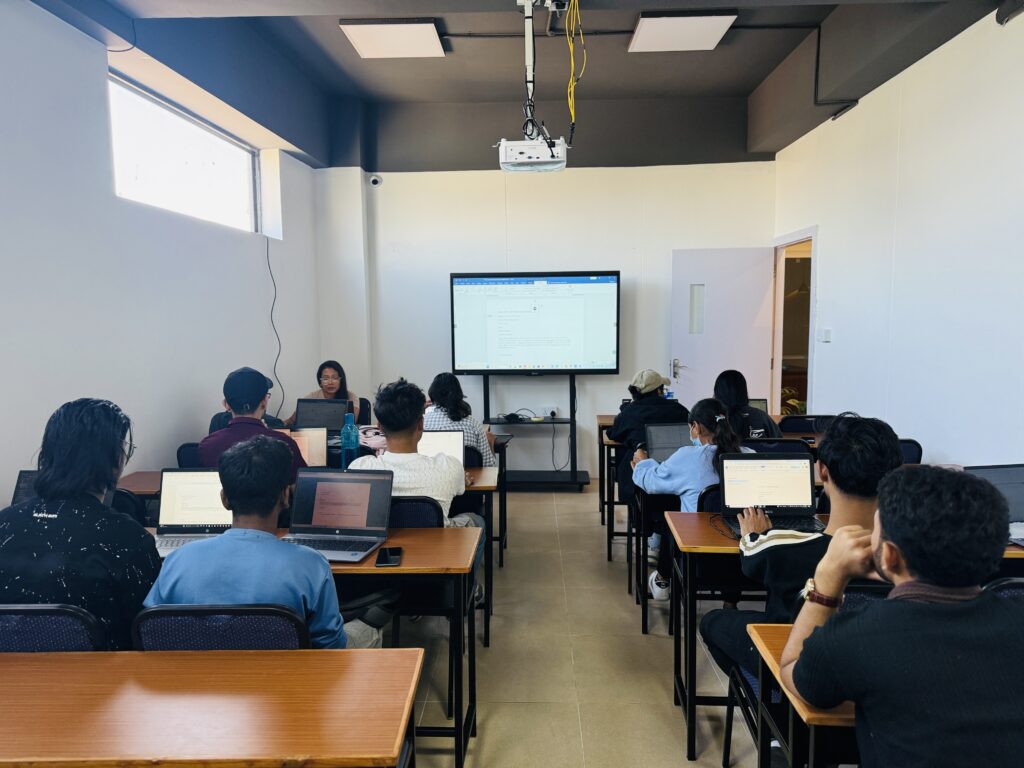
At FinT Learning Hub, an ACCA Gold Approved Learning Partner in New Baneshwor, Kathmandu, SBL classes are built around the way the exam is marked. Students write in the real exam format from the early weeks, practise in the CBE software, and get feedback on both technical points and professional skills, because the second is where most marks are lost. Before each sitting, the class works through the pre-seen together, focusing on understanding the business rather than predicting questions.
Classes run physically, online and as recordings, so working students and those outside Kathmandu follow the same plan. With June 2027 as the last sitting of the current exams, our tutors also help each student decide whether to aim for December, March or June, and how to sequence SBL with SBR and the Options.
Frequently Asked Questions about ACCA SBL
1. What is the ACCA SBL pass rate?
53% in September 2026. Over the last four years it has stayed between 49% and 53%.
2. How long is the SBL exam?
3 hours and 15 minutes. It was four hours before the pre-seen was introduced in September 2023.
3. How many marks are professional skills worth in SBL?
20 of the 100 marks. Each of the five skills is tested once and is worth 4 marks.
4. What are the five SBL professional skills?
Communication, commercial acumen, analysis, scepticism and evaluation.
5. When is the SBL pre-seen released?
Two weeks before the exam, through Exam Planner. ACCA emails you when it is available.
6. Can I pass SBL just by studying the pre-seen?
No. The pre-seen gives context only. The tasks are answered from the exhibits in the exam, using your syllabus knowledge.
7. Is SBL an open-book exam?
No. SBL is closed book. You have the pre-seen and exhibits on screen, but no notes.
8. How many tasks are in the SBL exam?
Three compulsory tasks, each with one or more parts.
9. Which response options are used in SBL?
A word processor, a spreadsheet and slides. Some tasks specify which to use; otherwise you choose the most suitable.
10. Is SBL the hardest ACCA exam?
Not on the numbers. In September 2026, AAA (42%) and APM (41%) had lower pass rates than SBL (53%). SBL feels hard because it tests applied judgement rather than recall.
11. Should I complete EPSM before SBL?
Yes. ACCA advises it, and completing EPSM before transition means you will not need the new Ethical, Sustainable Leadership module.
12. Can I sit SBL and SBR in the same session?
Yes. SBL is on Tuesday and SBR on Thursday of the exam week, so they do not clash.
13. How many hours should I study for SBL?
It varies by student, but plan for around 12 weeks of steady study with most of the time on timed question practice and full mock exams.
14. When is the next SBL exam?
Tuesday 8 December 2026, then Tuesday 2 March 2027 and Tuesday 8 June 2027.
15. What happens to SBL after June 2027?
It becomes S2 Strategic Business Leader in the redesigned qualification. A pass in SBL gives you credit for S2.
16. How much does the SBL exam cost?
For March 2027, ACCA lists £268 for standard entry and £430 for late entry. Check myACCA for the exact Nepal fee.
17. Which models should I learn for SBL?
Know the main strategy, governance, risk and change models in the syllabus, but ACCA rarely names a model in the task. Marks come from applying ideas to the case, not from describing models.
18. What is the most common reason students fail SBL?
Answering in general terms instead of using the exhibits, and running out of time on the final task.
Get Ready for SBL With FinT
SBL is passed by students who practise thinking like an adviser, not by those who read the most. FinT Learning Hub is an ACCA Gold Approved Learning Partner in Kathmandu with exam-focused Strategic Professional classes, timed mocks in the CBE format, pre-seen workshops before each sitting and feedback on professional skills as well as technical content. Classes are available physically, online and as recordings.
If you are planning SBL for December, March or the final June 2027 sitting, talk to the FinT team about the next SBL batch, or explore the FinT ACCA course to see how Strategic Professional classes are structured.
About the author: This guide was written by the FinT Learning Hub academic team, who teach ACCA from Applied Knowledge to Strategic Professional in Kathmandu. Pass rates and exam rules were checked against ACCA's published data and guidance, including the SBL exam essentials, and will be updated after each exam session.